

The Middle East conflict has entered a new and uncertain phase after Iran’s new Supreme Leader Mojtaba Khamenei issued his first official message since taking power, calling for the continued closure of the Strait of Hormuz and warning that US bases in region could be targeted if they remain operational.

As Article Published by the Express Tribune It is reported that, The remarks, broadcast by Iranian state television, come amid escalating tensions in the Iran-US-Israel conflict, which has already disrupted global energy markets and raised fears of a prolonged regional war. Analysts say the closure of the Strait of Hormuz — one of the world’s most important oil shipping routes — could have significant consequences for global oil supplies and international trade.
Khamenei’s statement marks the first major policy signal from the new Iranian leader since he assumed the role following the death of his father, Ayatollah Ali Khamenei, who was killed during the early phase of the ongoing conflict.
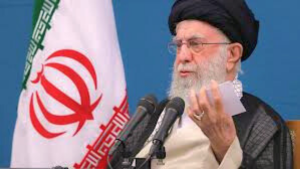
Mojtaba Khamenei First Message as Iran’s New Supreme Leader
Iran’s state media aired what it described as the first message from the country’s new Supreme Leader, Mojtaba Khamenei, who recently took over leadership after the death of his father.
In the statement, “Khamenei declared that all US bases operating in the region should be shut down immediately, warning that those bases could become military targets if they continue operating.”
According to the message, Iran considers the presence of US military installations in nearby countries as a major source of regional instability.
He argued that foreign powers have spent years building military and financial infrastructure across neighbouring countries, which he described as an effort to maintain dominance in the Middle East.
Khamenei also stressed that Iran’s military actions were directed toward those bases and not against the neighbouring nations themselves. He said Iran continues to value friendly relations with countries in the region and does not want the conflict to damage long-standing ties.
Iran shares borders or maritime connections with 15 neighbouring countries, and the new leader emphasized that Tehran remains willing to maintain constructive relationships with them.
Strait of Hormuz Closure Used as Pressure Against US and Israel
One of the most striking elements of Khamenei’s statement was his insistence that the closure of the Strait of Hormuz should continue as a strategic tool against Iran’s adversaries.
The narrow waterway connects the Persian Gulf to global shipping routes and is responsible for transporting roughly one-fifth of the world’s oil supply. Any disruption in the strait has immediate consequences for energy markets around the world.

Iranian officials have repeatedly described the blockade as a form of economic and strategic pressure aimed at the United States and its allies.
The decision has already triggered concerns among energy analysts and governments worldwide, as the Strait of Hormuz serves as a critical corridor for oil shipments from Gulf producers to international markets.
Without free navigation through the strait, the flow of oil and energy products could be severely restricted, increasing the risk of a global fuel crisis.
Iran Warns US Military Bases Could Be Attacked
In his message, Mojtaba Khamenei warned that US military bases across the Middle East would be targeted if they continue operating, signalling a potentially dangerous escalation of the conflict.
Iranian officials argue that these bases are part of the broader military network used by Washington to project power in the region.
The new supreme leader’s remarks came as Iranian officials reiterated that the country would seek revenge for the deaths of those killed in recent attacks, including an incident involving a school in the southern Iranian city of Minab.
Tehran has blamed foreign powers for attempting to weaken the country through military and economic pressure.
However, Khamenei also sought to reassure neighbouring states that the war should not harm diplomatic relations between Iran and other regional governments.
Despite accusations that some attacks originated from neighbouring territories, he said Iran does not want the conflict to damage its relationships with regional partners.
Iran Warns of Massive Regional Power Disruption
Iranian officials have also issued warnings about potential consequences if foreign forces attempt to cripple the country’s energy infrastructure.
Ali Larijani, secretary of Iran’s Supreme National Security Council, “said that any effort to dismantle Iran’s electricity network would lead to severe retaliation across the Middle East.”
According to Larijani, if Iran’s electrical capacity were destroyed, the impact could spread quickly across the region.

He warned that such an action could result in widespread power outages affecting multiple countries within minutes, potentially leaving US personnel stationed in the region exposed and vulnerable.
His remarks came in response to statements attributed to US President Donald Trump regarding Iran’s energy infrastructure.
Iranian leaders argue that targeting energy systems would not remain a localized event and could trigger broader disruptions throughout the region.
Iran Claims Strikes on Israeli Military Targets
Iran’s military has also claimed it conducted attacks on several Israeli military locations as part of ongoing operations.
Brigadier General Mohammad Akrami Nia, spokesperson for the Iranian army, told state television that Iranian forces were able to target sensitive locations inside Israel after disrupting enemy radar systems.

According to the statement, the Iranian military struck the Palmachim and Ovda air bases, along with the headquarters of Israel’s internal security service near Tel Aviv.
The spokesperson said the operations are becoming more precise over time, suggesting that Iranian forces are improving their ability to hit strategic targets.
Israel has not publicly confirmed the full extent of the damage from the alleged strikes.
Oil Tanker Attacks Spark Global Energy Market Fears
The conflict has already begun to affect global energy supplies, with reports of attacks on oil tankers and maritime infrastructure in the Persian Gulf.
Two fuel tankers were reportedly set ablaze in Iraqi waters after being struck during an incident involving explosive-laden boats.
Maritime security officials said projectiles also struck several commercial vessels operating in Gulf waters, raising concerns about the safety of shipping routes.

The attacks come at a time when oil markets are already experiencing volatility due to the ongoing war.
Energy analysts warn that disruptions to shipping lanes could significantly impact the global oil supply, especially if the Strait of Hormuz remains blocked.
Oil Prices Surge as Strait of Hormuz Remains Blocked
Oil prices have reacted sharply to the escalating conflict and fears of supply disruptions.
Earlier in the week, crude prices surged to nearly $120 per barrel, before briefly falling. However, renewed tensions pushed prices back above $100 per barrel during Asian trading hours.
Iranian military officials have suggested that oil prices could rise dramatically if the conflict continues.
One spokesperson warned that global oil prices could reach $200 per barrel, arguing that energy markets depend heavily on regional stability.
International energy agencies have begun considering emergency measures to stabilize the market.
The International Energy Agency recommended releasing hundreds of millions of barrels from global strategic reserves in an attempt to offset supply shortages and reduce price pressure.
The United States has also announced plans to release oil from its Strategic Petroleum Reserve to help calm markets.
US Says First Days of Iran War Cost Over $11 Billion
Officials in Washington have revealed that the first six days of the conflict with Iran have already cost the United States more than $11 billion.
The estimate was reportedly shared during a closed briefing with lawmakers.
The figure includes immediate operational expenses associated with the early phase of the military campaign but does not cover the full cost of the war.
Some US officials believe the overall financial impact could rise significantly as the conflict continues.
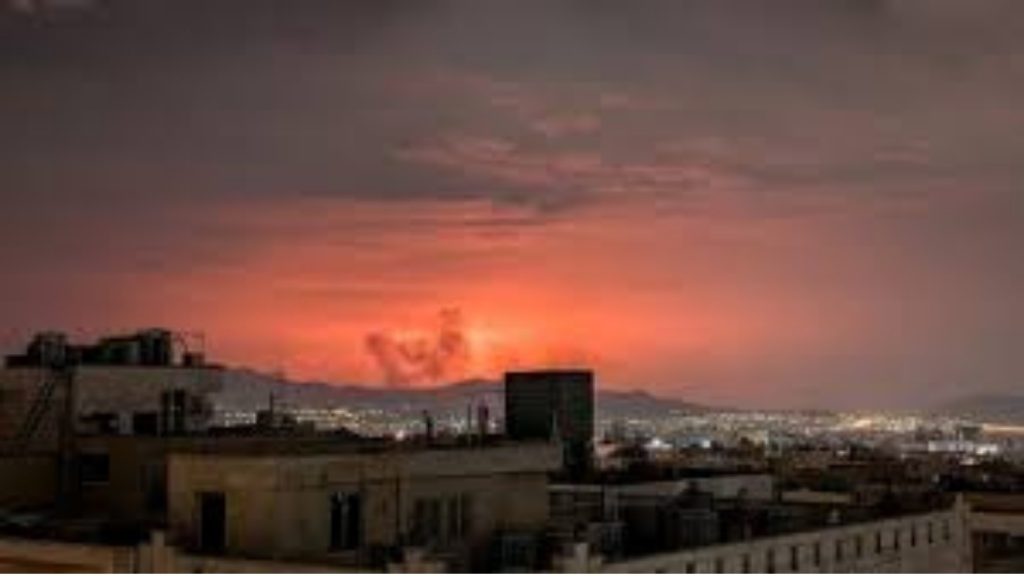
Reports suggest that the administration may eventually request up to $50 billion in additional funding to support ongoing military operations.
Despite the growing costs, President Donald Trump has publicly stated that the United States is close to achieving its objectives in the conflict.
Gulf Countries Call for Diplomacy Amid Rising Tensions
While the conflict has intensified, several Gulf Arab governments have emphasized the need for diplomacy and restraint.
Regional leaders have expressed anger over attacks targeting their territories but have also stressed that a broader war would be harmful for all parties involved.
Officials from Gulf states argue that Iran’s justification for attacking locations linked to US alliances is flawed and could destabilize the region further.
Despite public criticism of Tehran, many Gulf governments continue to advocate diplomatic solutions to prevent the conflict from spiraling into a full-scale regional war.
They also emphasize that even after hostilities end, Iran will remain a neighbouring country, making long-term coexistence unavoidable.
Rising Drone and Missile Attacks Across the Region
The ongoing conflict has also seen an increase in missile and drone attacks across several Middle Eastern countries.
Saudi Arabia reported intercepting a drone heading toward the Shaybah oilfield, marking the third such incident in a single day.
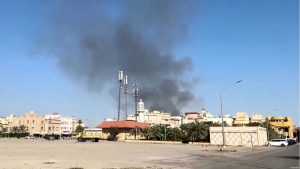
Meanwhile, authorities in Kuwait said a drone struck a building in the southern part of the country, injuring two people.
Dubai officials also responded to an incident in which a drone crashed near the Dubai Creek Harbour area.
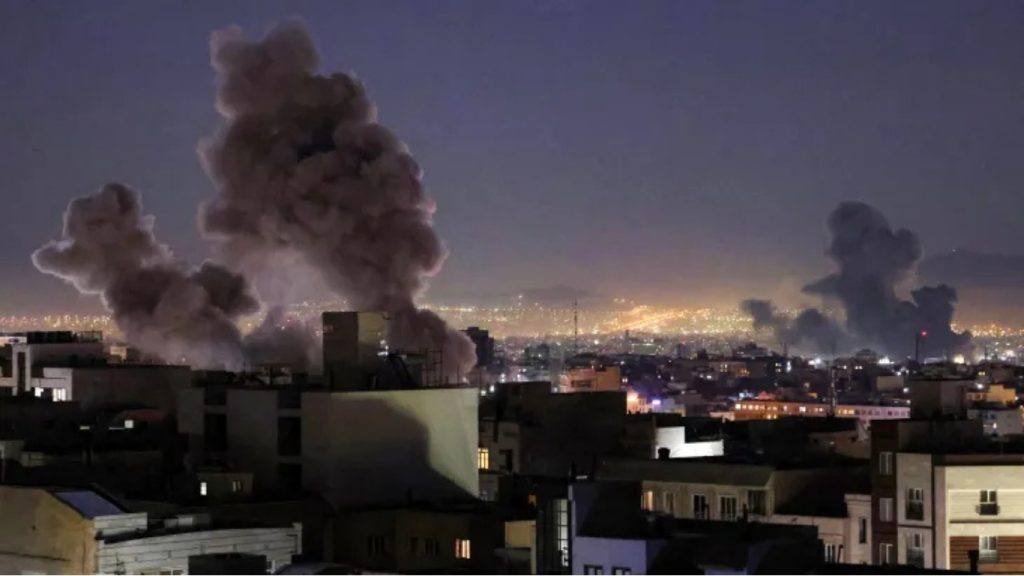
In Bahrain, air defence systems have intercepted more than 100 missiles and dozens of drones since the beginning of the conflict.
These incidents highlight how the war between Iran, the United States, and Israel is increasingly affecting multiple countries in the region.
Global Markets Watch Middle East Conflict Closely
The escalating tensions have triggered volatility in global financial markets.
Stock indexes in the United States and Asia have fallen as investors react to the growing geopolitical uncertainty.
Energy traders are particularly concerned about the future of shipping routes through the Persian Gulf.

With the Strait of Hormuz blockade continuing, many shipping companies and governments are closely monitoring the security situation in the region.
Some Western countries are also considering naval escorts for commercial vessels traveling through Gulf waters to ensure safe passage.
A Conflict With Global Consequences
The war between Iran and its adversaries has already caused thousands of casualties and significant damage across the region.
Humanitarian organizations say the conflict has had devastating consequences for civilians, including children.
Meanwhile, global leaders continue to warn that further escalation could destabilize energy markets and threaten international security.
As tensions remain high and military activity continues across the Middle East, the world is watching closely to see whether diplomatic efforts can prevent the conflict from expanding further.
2 Comments
Comments are closed.