Middle East Crisis: How the Iran-US-Israel War of 2026 is Reshaping the World Order
A month of direct confrontation has shattered decades of shadow warfare, closed the Strait…
A month of direct confrontation has shattered decades of shadow warfare, closed the Strait of Hormuz, and exposed the limits of Western power in a rapidly fragmenting global system.
October 7 Shock and Regional Domino Effect
Source: Reuters
The Reuters news agency stated that, The war that started on February 28, 2026 did not come from nowhere. It was the result of a chain reaction that began with Hamas’s October 7, 2023 attacks on Israel — a moment that broke the myth of Israeli invincibility and exposed big failures in global intelligence networks.
After that, a careful regional escalation happened. Hezbollah opened a northern front. The Houthis targeted Red Sea shipping. And Iran, watching its proxies suffer, prepared for what was coming.
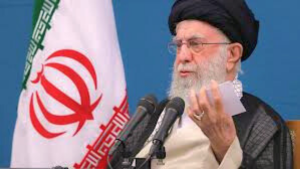
On February 28, 2026, the United States and Israel launched a joint attack against Iran — targeting nuclear facilities at Natanz and Fordow, ballistic missile warehouses, and Iran’s political leadership. According to Anadolu Ajansı and Reuters, Supreme Leader Ayatollah Ali Khamenei was killed in the first strikes.
The “shadow war” that had defined Iran-Israel relations for decades was over. Direct fighting had begun. Causes a big middle east crisis.
Operation Epic Fury: When the War Reached Iran’s Doorstep
According to a Reuters graphic report, US forces launched about 535 Tomahawk cruise missiles and 912 JASSM stealth cruise missiles, while aircraft dropped more than 1,000 JDAM guided bombs. Iran immediately fought back, launching hundreds of ballistic missiles and over 1,000 drones at US bases in Israel and across the Gulf.
The human toll reported so far:
- Total killed in Iran (including civilians and leaders): About 1,200–1,300+ (according to Anadolu Ajansı and Reuters)
- Lebanese killed: 1,142+
- US service members killed: 13+
- Israeli soldiers killed: 5+ (in Lebanon alone)
- Countries affected: 14+
Acoording to Anadolu Ajansı, Iranian Foreign Minister Abbas Araghchi has made statements about the conflict. The White House claimed on March 14 that Iran’s ballistic missile capacity has been “functionally destroyed” and drone attacks have fallen by 95%, while US Central Command (CENTCOM) confirmed that no US fighter aircraft have been shot down by Iran.
Strait of Hormuz Blockage: Global Economy’s “Choke Point”
Source: Food and Agriculture Organization (FAO) – Official Statement
According to the UN’s Food and Agriculture Organization (FAO), Iran’s actions have effectively closed the Strait of Hormuz. The FAO reported that tanker traffic through the Strait fell by more than 90 percent within days of the escalation.
Source: FAO & Reuters
The economic consequences came immediately:
- Fertilizer prices rose sharply – Middle East granular urea increased by 19% in the first week of March (according to FAO)
- Shipping insurance costs shot up – war-risk premiums rose from 0.25% to as high as 10% of vessel value (according to FAO)
- Global energy prices are rising (Reuters)
Source: Food and Agriculture Organization (FAO)
The UN’s Food and Agriculture Organization chief economist Máximo Torero warned that even if the conflict ended today, it would take two to three months to bring commodity costs back to normal.
“If this crisis continues for three to six months,” Torero added, “it will have an impact not only on the food security sector but on all other sectors.”
Houthi Factor: From Red Sea to Israel – A New Front
Source: Reuters
As the war went on, Yemen’s Houthi movement joined the conflict. Reuters has reported how cheap drones ($20,000–$50,000 per Shahed drone) are changing warfare, allowing smaller forces to challenge larger armies.
The Houthis have several strategic options, including direct attacks on Israel using ballistic and cruise missiles, and blocking the Bab el-Mandeb Strait — through which about 12% of global trade passes.
Source: Reuters & FAO
Saudi Arabia, which depends on both the Strait of Hormuz and Bab el-Mandeb for oil exports, now faces threats to both strategic waterways at the same time.
Test of US Leadership and the Global South’s Response
Source: Reuters & Anadolu Ajansı
The war has exposed deep cracks in the post-Cold War world order.
Source: Reuters
On March 21, Reuters reported that President Trump called other NATO countries “cowards” for refusing to help secure the Strait of Hormuz.
Source: Anadolu Ajansı
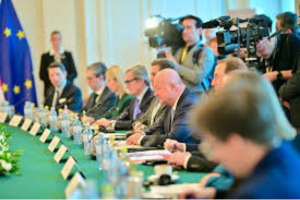
European allies have kept their distance. France’s Foreign Minister Jean-Noel Barrot said on March 11: “We do not approve of this war, and we are not participating in it.” He added that the strikes have no clear strategic goals and do not follow international law.
Source: Reuters
More importantly, the conflict has strained international blocs. University of Johannesburg professor Patrick Bond told The Globe and Mail (as mentioned by Reuters) that “BRICS didn’t really present any counterweight or any threat to the US and Israel.”
Meanwhile, several Gulf states are rethinking their security dependence on Washington. Reuters analysis shows that US military bases have become possible risks rather than just protective shields.
From Proxy War to Direct Confrontation: The End of Deterrence
Source: Reuters
The biggest change may be the end of deterrence. For decades, Iran and Israel fought through proxies — Hezbollah, Hamas, and other militias that gave them deniability. That time is over.
Source: Reuters
The economic imbalance in air defense is clear. Reuters reported that shooting down a $50,000 drone with a $3–4 million Patriot interceptor is “not a good cost equation,” according to Pentagon chief weapons buyer Bill LaPlante.
The US Navy has spent around $1 billion or more on munitions to defend ships since late 2023.
Source: Reuters
Iran has a large production capacity. Reuters estimates that Iran can produce around 10,000 drones per month.
Source: Anadolu Ajansı & CENTCOM
The White House claimed on March 14 that Iran’s ballistic missile capacity has been “functionally destroyed” and drone attacks have fallen by 95%, while US Central Command confirmed that no US fighter aircraft have been shot down by Iran.
Conclusion: The Emergence of a Multi-Polar World
Source: Reuters & Multiple News Outlets
The most lasting effect of this war may be that it shows the unipolar moment is truly over.
A Reuters analysis on March 21 concluded that the United States cannot simultaneously handle China, support Ukraine, and fight a big Middle Eastern war. Its European allies are not willing to fully commit. Gulf states are keeping their options open. And international institutions have failed to stop or prevent the conflict.
As the Reuters analysis said, President Trump finds “no clear exit strategy” from this growing conflict.
The world is not becoming more chaotic by accident. It is becoming more chaotic because the structures that kept order for eighty years are collapsing under their own weight.
And in the Middle East, as in Ukraine, as in the South China Sea — the strong no longer pretend to ask for permission.